
Period Property Floors
Georgian, Victorian & Edwardian floors — restored to honest age, not airport-shine.
Period-correct species — pitch pine, baltic deal, English oak, elm — sympathetically refinished by hand. Hardwax oil over polyurethane lacquer. Traditional joinery for sister-boards and infills. Restore first, replace only where the wood is genuinely beyond saving.
Sussex · Hampshire · Surrey · South Downs · Chichester / Petworth / Midhurst period homes · 29 years restoring Victorian & Edwardian floors
29
years on period floors
95%
less dust vs traditional
5.0
★ · 215 reviews
About period property flooring
There's Victorian floor work, and there's Victorian floor work.
A pitch pine boarded floor in a Petworth Georgian townhouse and a baltic deal floor in a Chichester Edwardian semi look superficially similar — long boards, soft amber tone, the gentle cup-and-crown of a hundred years of seasonal movement. They are not the same wood, they do not take the same finish, and they do not want the same gap-filling. A generalist sanding crew will treat them identically, knock them back to bare timber with a single grit progression, and seal them in whichever lacquer is in the van that week. The result reads "newly sanded" rather than "old floor, well looked after" — and for a period homeowner who fell for the house *because* the floors had character, that's a quiet heartbreak.
We've been working timber floors across Sussex, Hampshire and Surrey since 1997, and the period side — non-listed Georgian, Victorian and Edwardian houses across the South Downs and the Chichester / Petworth / Midhurst corridor — is where craftsmanship matters most. We can tell pitch pine from baltic deal at the first board lift; we know which finish lets each species age in the way the original joiner intended; and we'll restore first, every time, where the wood is sound enough to be restored. Most of the floors we're asked to "replace" don't need replacing — they need someone who knows what they're looking at.
Restore-first decision tree at survey — replacement only where boards are genuinely past saving
Period-correct species knowledge — pitch pine, baltic deal, English oak, elm, mahogany inlays
Traditional joinery for sister-boards and infills — hand-cut scarf joints, period-pattern nailing
Subfloor remediation — rotten joist-ends, woodworm, lath-and-plaster ceiling protection from below
Sympathetic finishes — hardwax oil and traditional wax over modern polyurethane lacquer
Written maintenance card — exact products, re-coat cycle, touch-up kit supplied
Most common
Victorian Terraced Home
Late-Victorian terraces across Chichester, Bognor Regis, Worthing and the Sussex coast — typically baltic deal or pitch pine boards 6–8" wide on rough-sawn joists, often laid over a brick-vault sub-basement. Common issues: cupped boards from a damp solum, end-rot at the joist hangers, gaps wide enough to lose a coin. We lift where needed, firm up the joist ends, gap-fill with hand-cut matched-timber slivers, then refinish in a soft amber hardwax oil that lets the floor read its age. Most ground floors restored over 1–2 weeks.

Specialist
Georgian Townhouse
Georgian townhouses in Petworth, Midhurst and the South Downs market towns — typically pitch pine boards in generous widths (8–10"), often with mahogany or oak inlays at the threshold strip, sitting on hand-cut deal joists that have seen 250 years of weather. The boards are usually thick enough for three more full sands; the joinery underneath wants a careful hand. We work to a restoration brief: keep the lift-and-relay to a minimum, scarf-joint new pieces where original is genuinely missing, and finish in a traditional wax over hardwax oil so the patina has somewhere to go in the next century.
Edwardian
Edwardian Semi
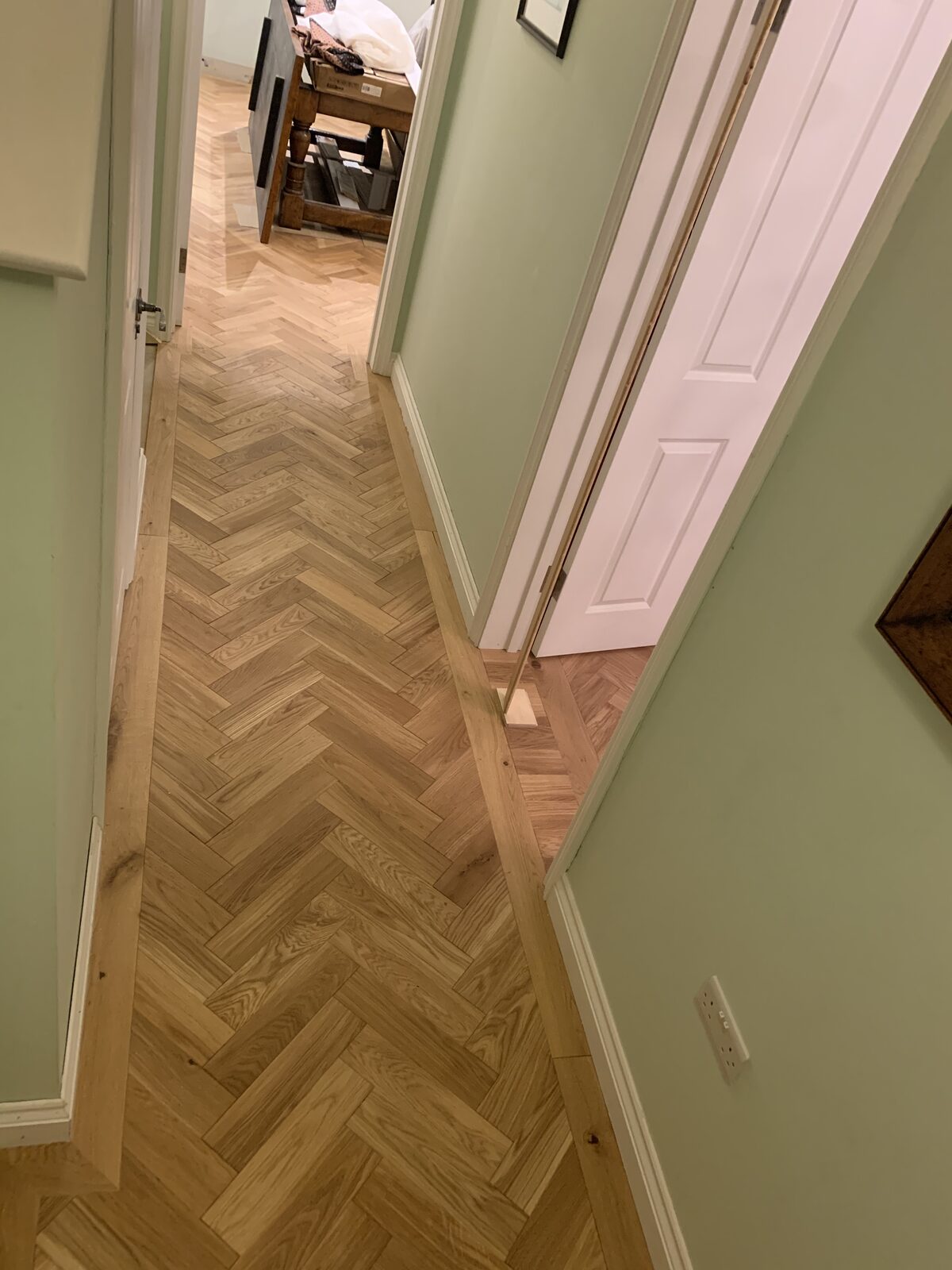
Edwardian semi-detached homes across Chichester, Bognor, Worthing and the Sussex coastal towns — often the first floors in Sussex to use shorter-length quarter-sawn baltic deal boards, plus the era when parquet became common in the front room. Two floors, two methods: boards in the rear / kitchen / hall, parquet in the dining and front room. We restore both in one programme, matching the finish across the threshold so the floors read as one continuous period scheme.

Cottage
Inter-War Cottage
1920s and 1930s cottages — typically narrower deal boards laid on more modern joist spacings, often with original 1930s oak-block parquet in the entrance hall and dining room. The boards are usually thinner than their Victorian counterparts (15–18mm) so we sand more conservatively and stop at the finest grit the wood will take. Parquet gets the same treatment we give 1930s blocks elsewhere — lift the loose pieces, re-bed in fresh bitumen-free adhesive, replace from architectural-salvage stock where missing, three-pass sand, period-appropriate finish.
Conversion
Period Conversion
Churches, schools, farm buildings and chapels converted into family homes — most often somewhere between Goodwood and Cowdray. The floor history is mixed: some original sanctuary boards, some 1970s replacement softwood, often a patchwork from the conversion build. We map the floor zone-by-zone at survey, sympathetically restore the original sections, and where replacement is genuinely needed we'll source reclaimed boards of the right age and species rather than laying new. The final read is a single coherent period floor, not a chequerboard of decades.
How we restore a period floor
From honest survey to maintenance card.
Period work rewards patience at the diagnosis stage. The wrong species ID, the wrong subfloor read, or the wrong finish picked in the first hour will haunt the rest of the job.
-
Survey & period assessment
Darren visits, lifts a board or two, identifies the species by end-grain and weight, checks joists and subfloor, and walks you through what the floor *is* before talking about what to do with it. 30–40 minutes, no pressure. Many of our period clients have been told elsewhere that the floor is past saving — we'll tell you honestly whether it is or isn't, and the answer is almost always restore.
-
Restore-or-replace decision
Written quote within 72 hours with a clear restore-or-replace recommendation per zone. We'll show you the maths: restoration is typically 40–60% of replacement cost, and a 100-year-old pitch pine floor takes a finish that no new wood ever quite matches. Where boards genuinely have to be replaced (end-rot through to joist level, insect damage left too long), we'll source the right age and species — not a modern lookalike.
-
Species & finish samples in period light
Before any commitment, we lay sample patches of stain, finish and gap-fill in the actual room — typically tucked under where furniture will sit. You see them in your morning light, your evening light, and the colour the period light fittings throw on a winter afternoon. Pitch pine under tungsten reads very differently from pitch pine under daylight; this is the most useful hour in the whole programme.
-
Sympathetic install or restoration
Sister-boards and infills hand-cut to match — scarf joints rather than butt joints where the original joinery used them, period-pattern nailing rather than modern brad-nailing where it'll show. Lath-and-plaster ceilings below get plywood sacrificial sheeting laid over the joists between the boards so a missed nail doesn't end up in the lounge below.
-
Finish & cure
Hardwax oil for most period work — it lets the wood breathe, ages in rather than fights age, and a re-coat in 7–10 years is a single day's job. Traditional wax over oil where the original look needs preserving. Polyurethane lacquer is fast and tough but reads wrong on a period floor — we'll only specify it where the wear pattern genuinely demands it (rare in a period home).
-
Maintenance card & touch-up kit
Walkthrough with a written care card listing exactly which products were used, the cure schedule, the recommended re-coat cycle, and what to do if anything ever marks. Touch-up kit supplied — for most period floor clients, the next attention this floor needs is a single re-coat in 7–10 years. We're a phone call away if anything ever comes up.
Recent period property flooring work
A few of our period property flooring projects.
Real homes where this work has just gone in — across Sussex, Surrey and Hampshire.
Steyning, BN44
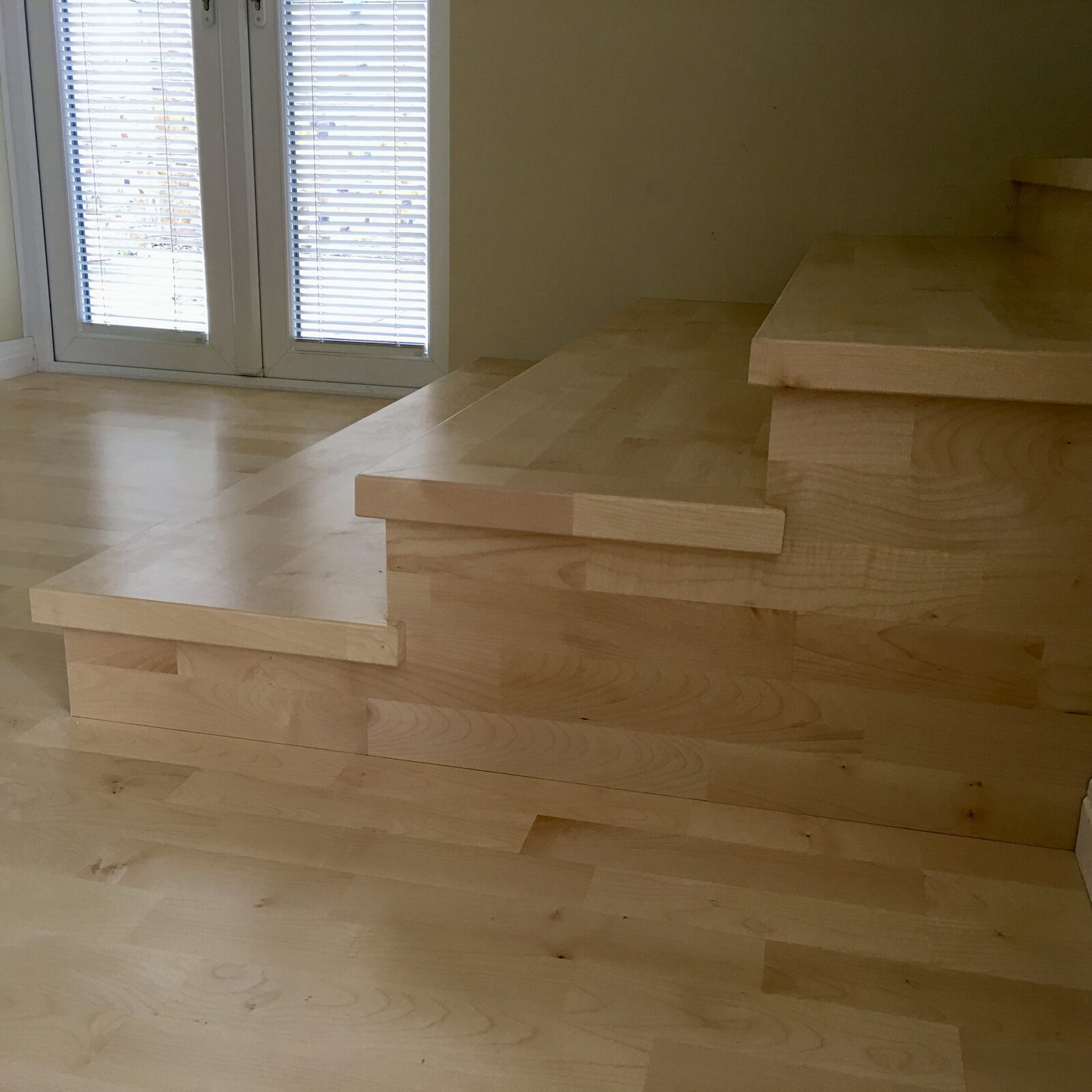
Pale maple-toned stepped floor
Pale honey strip boards carried up and over a low split-level with shallow stepped landings — a clean, light grain finished in a glossy lacquer that bounces the daylight from the patio doors. The kind of bright, hard-wearing floor we’d fit through a Steyning home.

Midhurst, GU29
Mosaic parquet, mid-restoration
Original panel-mosaic parquet stripped back and sanded to bare timber — the basket-weave tiles with their diagonal inserts laid open and dust-dry, ready for repair and finishing. The kind of period mosaic floor we’d take right back before bringing the colour and sheen home in Midhurst.

Chichester, PO19
Dark-stained pine boards
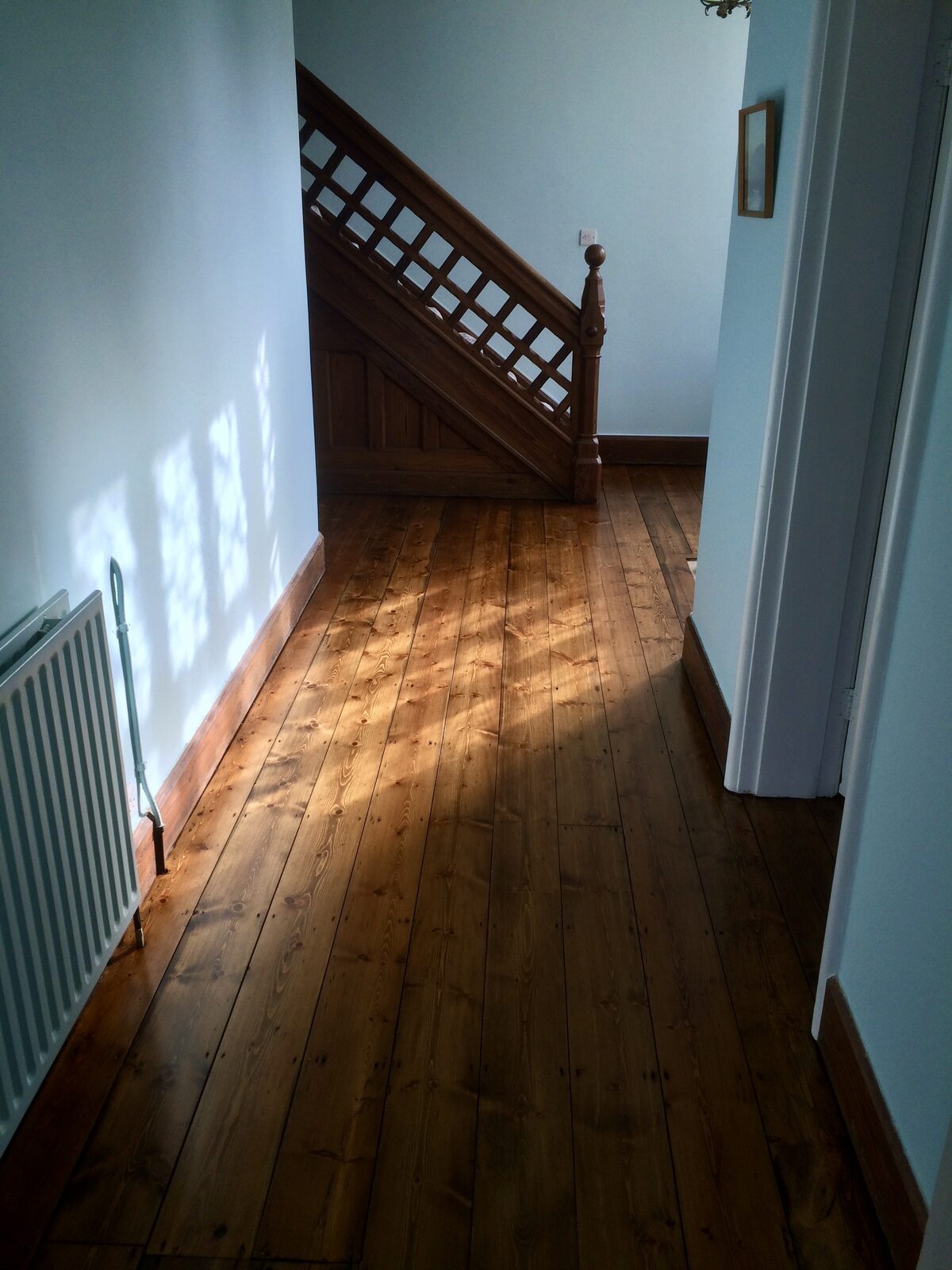
Original pine boards taken to a deep walnut-brown stain and brought up to a rich glossy sheen — plenty of knot and grain showing through against the crisp white skirting of a period bay room. The kind of warm, dark period floor we’d restore in a Chichester home.

Lindfield, RH16
Honey-toned wide pine boards
Original wide pine boards in a warm honey-amber tone, worn smooth over the years and finished in a soft low-sheen oil that keeps every bit of the patina. Set against a sash window and cast-iron radiator — the kind of period floor we’d bring back in Lindfield.
Room by room
Period wood flooring for every room in the house.
Where you’re laying it changes what we recommend. Here’s how we approach period wood flooring in each room of a home.
Period wood flooring for kitchens
The busiest floor in the house — spills, dropped pans and constant footfall. We spec hard-wearing boards and a tough, wipeable finish that shrugs off splashes around the sink and hob.
Period wood flooring for bathrooms
Moisture is the enemy here, so we lean toward engineered constructions and water-resistant finishes — warm wood underfoot without the swelling and cupping that catches solid boards out.
Period wood flooring for hallways
First impression and highest traffic in one. Durable, scuff-resistant boards run wall-to-wall to draw the eye through the house and take the daily pounding of muddy boots and the front door.
Period wood flooring for living rooms
The room you actually live in. Wider, character-grade boards make the space feel calm and considered, with a satin finish that's warm to walk on of an evening.
Period wood flooring for bedrooms
Quiet, warm and easy on bare feet first thing. We fit over acoustic underlay upstairs and finish with a low-sheen oil that keeps the room restful.
Period wood flooring for stairs
The hardest-working timber in the house and the trickiest to fit. Bullnosed treads, matched risers and a non-slip finish, scribed to the existing strings for a seamless run.
Period Property Flooring across the region
Period Property Flooring from Chichester to Steyning.
Period Property Flooring is the bread and butter of the workshop. You’ll see our van rolling out of Bognor Regis most weeks toward Chichester, Haslemere, Petersfield, Midhurst, Arundel, Petworth and Steyning — the postcodes across Sussex, Surrey & Hampshire where period property flooring keeps the diary full. Georgian, Victorian and Edwardian floors restored to honest age — pitch pine, baltic deal, English oak, elm, mahogany inlays. Restore-first philosophy, traditional joinery, period-correct finishes.
Whether the brief is a Georgian terrace in Chichester, a 1930s semi out near Haslemere, or a converted barn off the lanes around Steyning, the spec and the standard don’t shift. Darren surveys on-site, sample boards stay with you for a fortnight under your own lighting, and the install runs in a single solid stretch — no day-trip back-and-forth, no chain of phone numbers, flat-rate quotes by the job not the mile. Family team since 1997, covering Sussex, Surrey & Hampshire from the same coastal base.
“Amazing floor repair and sanding. Excellent workmanship and fair and transparent price — really pleased with the restoration of our very old cottage floor and would highly recommend Darren's work and communication. Thank you.”
Read this on Google
Frequently asked
Questions about period property flooring.
Should I restore my Victorian or Edwardian floor, or replace it?
Almost always restore — and we say that having been called in to second-opinion floors that other contractors said were beyond saving. A properly identified period floor (pitch pine, baltic deal, English oak) sanded back to bare wood, gap-filled traditionally and finished in hardwax oil takes a look that no new wood ever matches. Restoration is typically 40–60% of replacement cost. The only times we recommend replacement are where boards are too thin to sand again (rare on Victorian and Georgian floors, occasional on inter-war), water damage has rotted through to joist level, or insect damage has been left for years and undermined the structure. We tell you honestly at survey.
How do you tell pitch pine from baltic deal from oak — and why does it matter?
End-grain pattern, weight, smell (pitch pine has a distinctive resin smell when freshly cut), and growth-ring density tell you the species at a single lifted board. It matters because they take finishes very differently — pitch pine is naturally resinous and likes a thin oil that lets the resin sit on the surface; baltic deal is softer and takes a stain more evenly than pine; English oak is the most forgiving of all three. A generalist crew who treats them all the same will get one of them right and two of them wrong. We've been calling species at the board lift since 1997.
Can you fill the gaps between my old floorboards traditionally?
Yes — and there's a right way and a wrong way for period work. The right way is to hand-cut slivers of matched timber (same species, similar age where we can source it from architectural salvage) and wedge-and-glue them into the wider gaps, then mix the floor's own sanding dust into a clear resin to fill the hairlines. The wrong way is to caulk every gap with modern flexible filler — it reads as plastic against the wood and goes a tell-tale brown over the years. We'd rather leave hairline gaps open than fill them badly.
What's wrong with polyurethane lacquer on a period floor?
Two things. First, the look — lacquer sits on top of the wood as a plastic skin; hardwax oil sinks in and lets the grain breathe. On a period floor where you fell for the character, lacquer reads as a layer between you and the wood. Second, the maintenance — when lacquer eventually fails (it will, in 8–12 years), the only fix is a full sand-back to bare wood. Hardwax oil can be spot-repaired and re-coated in a single day at the 7–10 year mark, without lifting a board. For modern hardwood floors with kids and dogs we'll happily specify a Bona commercial lacquer; for period work, oil is almost always right.
Will sanding damage the lath-and-plaster ceiling below my Victorian floor?
Not if it's done properly. The sander itself doesn't reach the joists — it works on the top surface of the boards. The risk is a dropped nail or screw working its way through the lath-and-plaster from above during the lift-and-relay phase. We lay plywood sacrificial sheeting between the boards over the joists where we're working, and dust extraction on the sanding machines means minimal airborne debris transfer into the plaster. We've worked on hundreds of period homes with original lath-and-plaster ceilings and have never put a tool through one. Insurance is £5M PL anyway, if you want the comfort.
How thin does a Victorian floorboard get before it's not worth sanding again?
Solid pitch pine and baltic deal boards from the 1850s-1900s typically start at 22–28mm thick and have a tongue-and-groove around 8–10mm down from the top. Each full sand takes 0.5–1mm off the top, so you generally have three to four more full sands in your floor's life. Most period homeowners have at most one previous sand in the floor's history (often none — what you're seeing is original surface under varnish), so a Victorian or Georgian floor is almost always good for another century of useful sanding life. We check the actual thickness by lifting a corner board at survey.
Can I match a damaged section without it being obvious where the repair starts?
Yes — and it's the single most asked-for thing in period restoration. We source reclaimed boards of the right species and age (Forrestal has good relationships with architectural-salvage yards across the South), match the growth-ring density and grain pattern as closely as we can, and bed the new piece in with scarf joints rather than butt joints where the surrounding joinery used scarfs. Once finished in the same oil as the rest of the floor, the repair is invisible to anyone who didn't see it being made. We'll show you the matched stock at survey before committing.
Is this different from your floor restoration page?
Yes — and they overlap. Our general floor restoration page covers the *technique* (low-dust sanding, traditional gap-filling, hand-applied finishes) across any floor — period or modern. This page covers the *period context* — species identification, period-correct joinery, sympathetic finish selection for Georgian, Victorian and Edwardian houses specifically. If your floor is a modern hardwood that's tired, the restoration page is the right read. If your floor is genuinely period and you want someone who knows their pitch pine from their baltic deal, this is the right read.
Are you fully insured and willing to work to a conservation officer's brief?
Yes — £5M public liability, £10M employer's liability. For *non-listed* period homes there's usually no consent overhead, which is why this page exists separately from our listed building flooring page. Where a non-listed period property sits in a conservation area, we'll write a methodology statement for the planning officer where one is asked for, but most non-listed period work doesn't need it. We'll tell you at survey whether your property triggers any consent. Larger period houses where the brief covers multiple rooms across several phases — country estates, manor houses, the principal residences on a wider estate — sit on the country estate and manor house page; the period craft is the same, the rhythm of the programme is different.
Ready to start?
Talk to Darren direct
07973 658149
Mon–Fri, 8am–6pm
Get a free survey for your period property flooring.
Darren will visit, measure up and walk you through species, finishes and lead times. No pressure, no hard sell — just specialist advice.