
Floor Restoration Specialists
Original floorboards, back to their best.
Low-dust sanding, traditional gap-filling, hand-applied finishes. Period boards, parquet, well-worn modern floors — restoration almost always beats replacement.
Free survey across Sussex, Surrey & Hampshire · 29 years restoring period & modern floors
95%
less dust vs traditional
29+
years on the tools
5.0
★ · 215 reviews
About floor restoration
Restore, don't replace — where the boards are sound.
A properly sanded period floor takes a finish that no new wood ever quite matches. The grain has settled, the cuts have lived through a century of footfall, and the patina under the old varnish is something you can't buy off a shelf. Where the boards are structurally sound, restoration is almost always the right answer — typically 40–60% of the cost of replacement, and you keep every bit of the character that brought you to the room in the first place.
We use Bona and Lägler low-dust sanders connected to HEPA-filtered extraction, which means most jobs leave less dust behind than a normal day's hoovering. Gap-filling is done the traditional way — slivers of matched timber bedded into the larger gaps, a resin-and-sawdust paste for the hairlines — never modern flexible filler that reads wrong against the wood. Finishes are hand-applied: hardwax oil for period boards and parquet, traditional wax where the original look needs preserving, and a Bona commercial lacquer where you need bombproof wear (kids, dogs, the lot).
Low-dust sanding with HEPA extraction
Traditional sliver gap-filling, not flexible filler
Period boards, parquet & modern hardwood
Hand-applied oil, wax or lacquer finishes
Localised repair & board replacement
Stain matching to surrounding original work
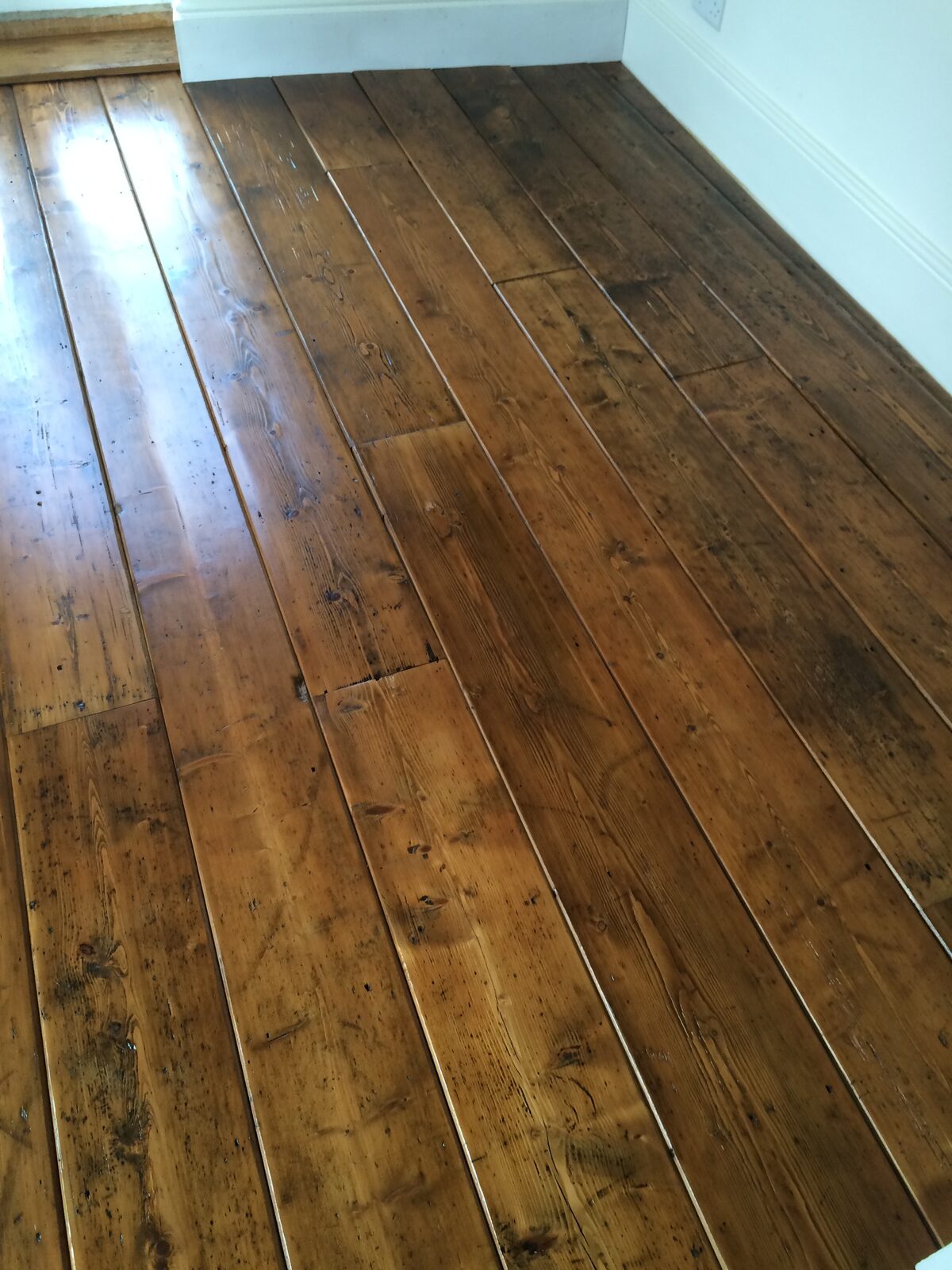
Most common
Period Floorboards
Georgian, Victorian and Edwardian pine and oak boards. Lifted where needed, structural repairs to joists, gap-filled with traditional matched-timber slivers, sanded back to bare wood and refinished in oil or wax to suit the period of the property.
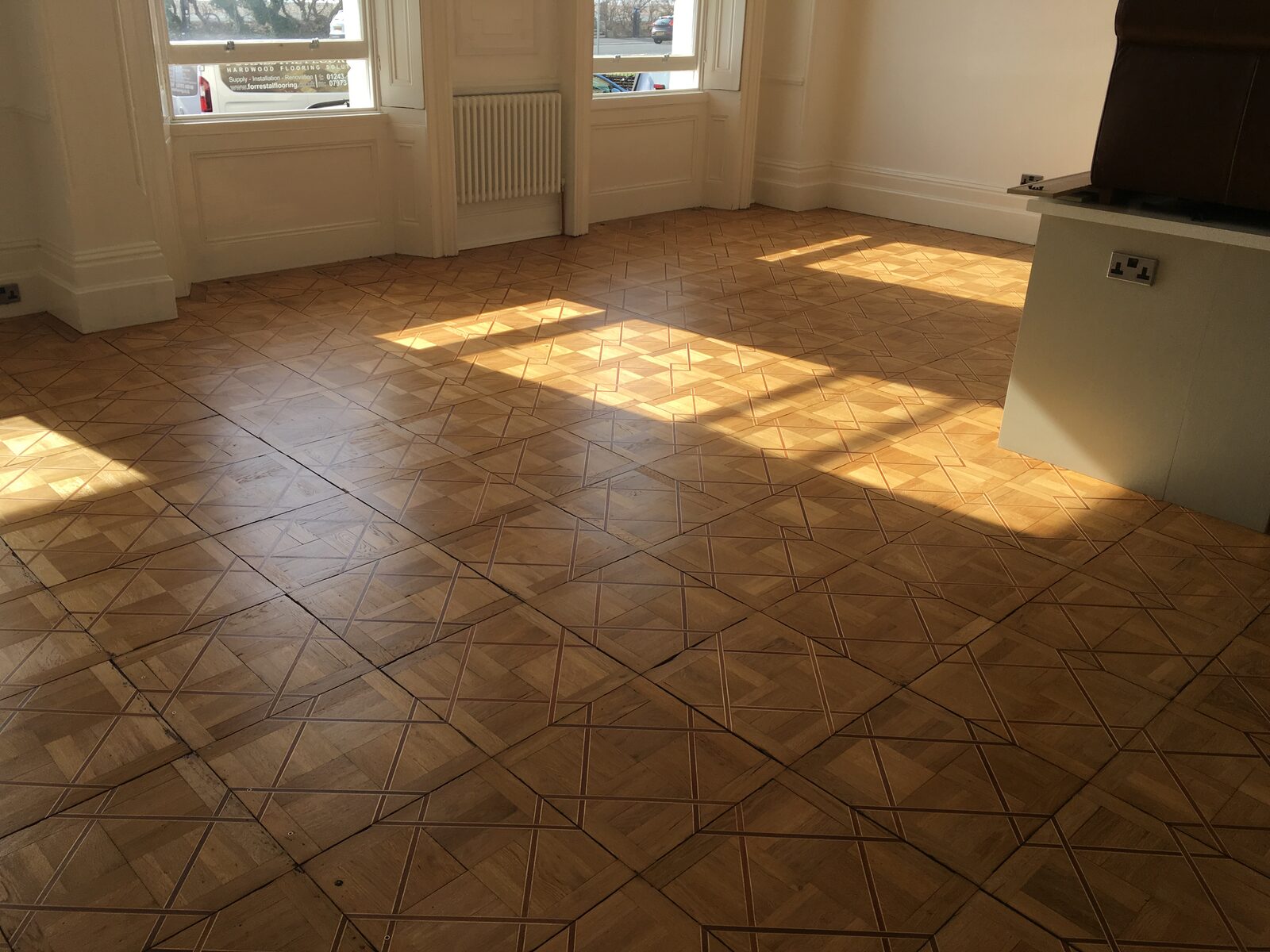
Specialist
Parquet & Block Floors
Original 1930s and Edwardian parquet — re-glued where blocks are lifting, individual pieces replaced from architectural-salvage stock where missing or beyond saving, full three-pass sand and a period-appropriate refinish. Often cheaper than you'd expect.

Modern Hardwood — Tired Finish
Existing solid or engineered wood floors where the surface has gone yellow, scratched or worn through. We sand back through the old finish to bare wood, then refinish to your choice — natural oil for warmth, lacquer for traffic, or a tinted finish if you want to shift the tone.
Repair
Water & Damage Repair
Localised board replacement, water-damage rectification, pet-damage repair, builder-scratch refinish. Wherever possible we tone-match new pieces against the surrounding boards using oil and stain blending — done well, you shouldn't be able to see where the repair starts and stops.
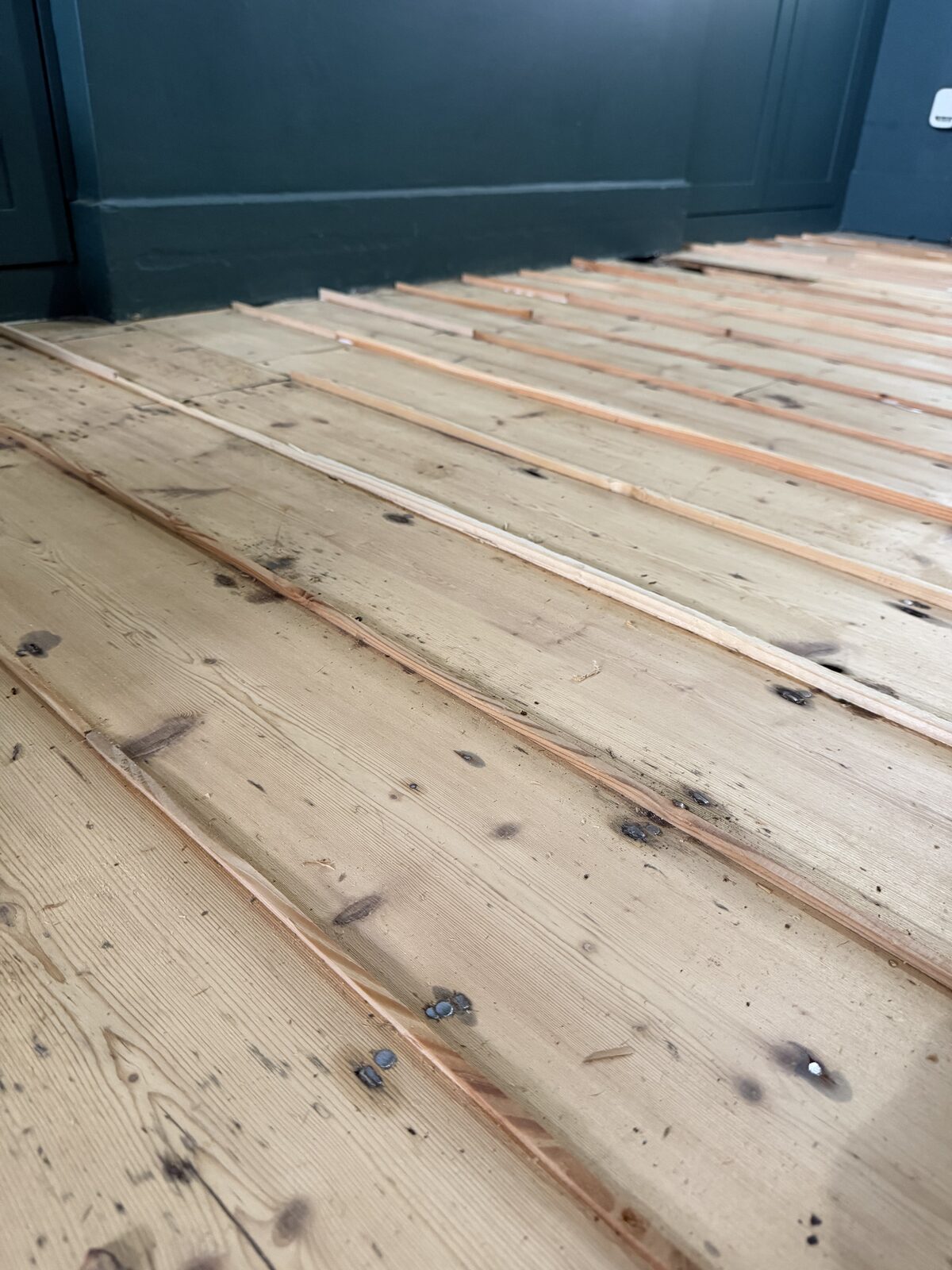
Gap-filling & re-sealing only
Where the floor doesn't need a full sand-back — just the gaps closing and a fresh top coat. Common on floors that were properly refinished five-to-ten years ago and have started to dull. Often a single day on site.
Hospitality
Pub & Coaching-Inn Restoration
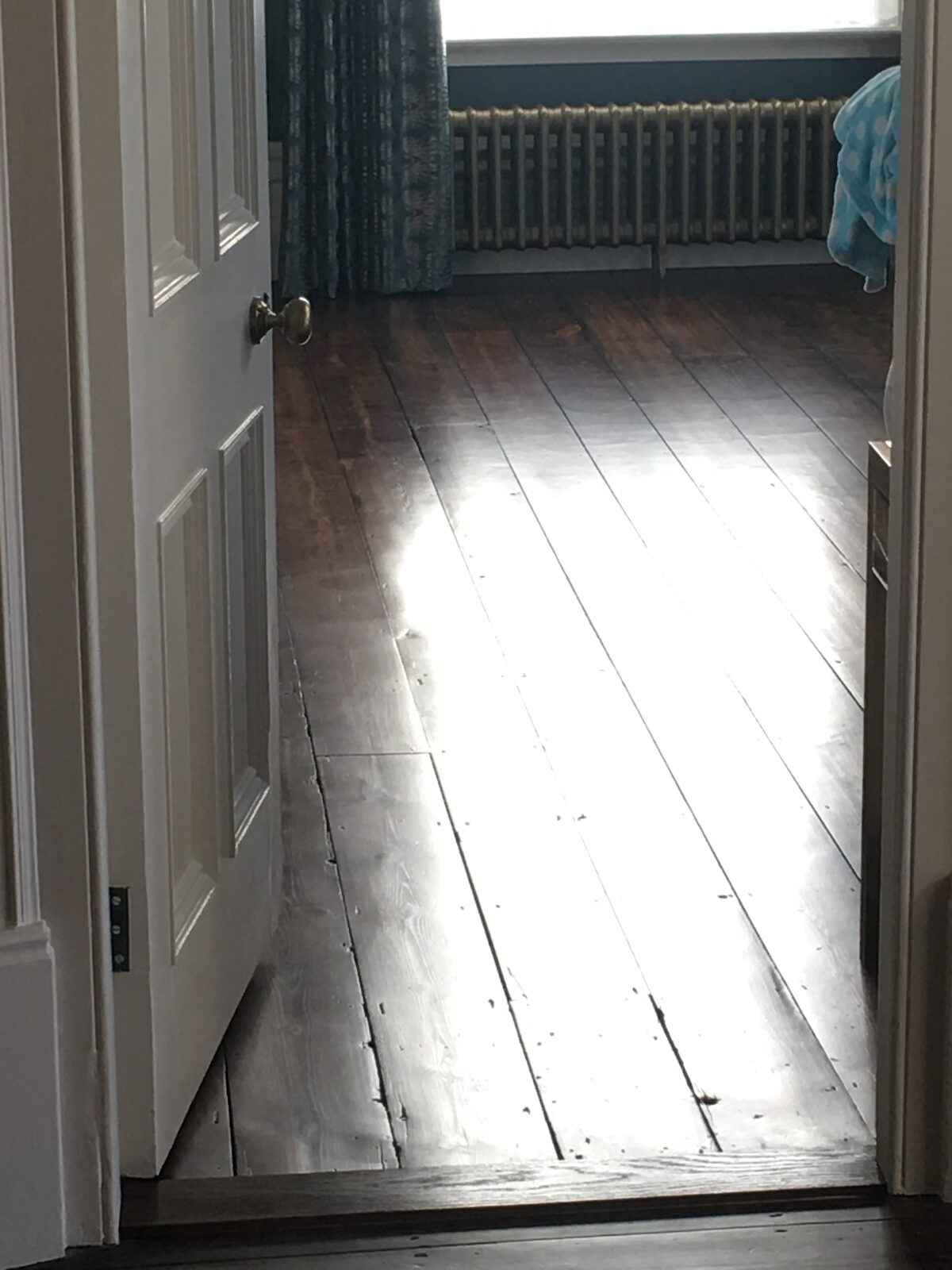
Original Victorian taproom boards, coaching-inn chevron parquet, and listed-building snug floors brought back to life under licensed-trade and conservation-officer scrutiny. We'll write the methodology statement for the consent application ourselves, source matched-board repairs from architectural-salvage stock, and phase the work across trading-day closures. See our pubs, bars & inns page for the full spec including reclaimed-board fit-outs and beer-tolerant finishes.
Heritage
Listed Building Restoration
Grade I, II* and II listed homes, churches and manors where the restoration has to clear the conservation officer before a sander touches a board. We write the methodology statement, run the consent dialogue, document everything for the consent file, and use reversible techniques where the listing requires it — no permanent fixings into original substrate, no chemistry that can't be undone. See our listed building & heritage flooring page for the full spec including consent timing, photographic record protocols and reversible install methodology.
How we restore
From first look to final coat.
Restoration rewards patience at the diagnosis stage. Once we know what we've got, the work itself follows a tested rhythm.
-
Free home survey
Darren visits, lifts a board or two where needed, checks the joists and subfloor, and walks you through what's possible. 30–40 minutes, no pressure, written quote within 48 hours. We'll tell you honestly if replacement is the better answer.
-
Furniture & dust-isolation prep
Larger items moved by us, doorways sealed with plastic sheeting, vents and skirting tape-masked. HEPA extraction units positioned before any sander leaves its case — most clients are surprised by how little dust ends up in the rest of the house.
-
Board repair & gap-filling
Loose boards re-fixed, damaged pieces lifted and replaced (matched as closely as we can), wider gaps filled with hand-cut timber slivers wedged and glued in. Hairline gaps filled with a resin-and-sawdust paste mixed from the floor's own dust so the tone reads right.
-
Three-pass sanding
Coarse → medium → fine with HEPA extraction on every cut. Edges done with a Bona edger, corners by hand. We dust between passes so the next grit isn't pushing yesterday's coarse residue around. The floor is bare-wood ready by end of day two on a typical room.
-
Stain & finish
If you want a tonal shift — lighter, darker, smoked — the stain goes on first and gets sampled in the room before signing off. Then two or three coats of your chosen finish (hardwax oil, traditional wax, or a Bona commercial lacquer), hand-buffed between coats.
-
Walkthrough & care card
Final walkthrough with a written care card showing exactly which products were used, the cure schedule for the finish, and what to do if anything ever marks. Touch-up kit supplied — for most clients the next attention this floor needs is a single re-coat in 7–10 years.
Recent floor restoration work
A few of our floor restoration projects.
Real homes where this work has just gone in — across Sussex, Surrey and Hampshire.
Chichester, PO19
Pale oak herringbone, newly laid
A pale whitewashed oak herringbone freshly laid across a barn-style room still under renovation, with exposed dark trusses overhead and arched alcoves to the side — light and clean against the bare plaster. The kind of bright herringbone floor we’d put down in Chichester.

Steyning, BN44
Pale maple-toned landing and stair
A pale blonde maple-toned landing flowing down a matching flight of stairs beside a glass balustrade — fine, even grain in a light tone finished to a soft satin, keeping the hallway bright and airy. The kind of light timber stair and landing we’d lay in Steyning.

Midhurst, GU29
Geometric oak parquet, sun-lit
A geometric oak parquet brought back to life — pale honey blocks set in a basket-weave pattern with fine darker inlay lines, sanded level and re-finished in a soft satin that catches the raking light. The kind of decorative floor we’d restore in a Midhurst home.
Chichester Harbour, PO19
Greige oak herringbone by garden door
Engineered oak herringbone in a soft greige-brown tone, run up to a glazed garden door and finished matt so the grain stays quiet underfoot. The kind of refreshed parquet we’d sand and re-oil to read as one clean install in a Chichester Harbour home.
Room by room
Wood floor restoration for every room in the house.
Where you’re laying it changes what we recommend. Here’s how we approach wood floor restoration in each room of a home.
Wood floor restoration for kitchens
The busiest floor in the house — spills, dropped pans and constant footfall. We spec hard-wearing boards and a tough, wipeable finish that shrugs off splashes around the sink and hob.
Wood floor restoration for bathrooms
Moisture is the enemy here, so we lean toward engineered constructions and water-resistant finishes — warm wood underfoot without the swelling and cupping that catches solid boards out.
Wood floor restoration for hallways
First impression and highest traffic in one. Durable, scuff-resistant boards run wall-to-wall to draw the eye through the house and take the daily pounding of muddy boots and the front door.
Wood floor restoration for living rooms
The room you actually live in. Wider, character-grade boards make the space feel calm and considered, with a satin finish that's warm to walk on of an evening.
Wood floor restoration for bedrooms
Quiet, warm and easy on bare feet first thing. We fit over acoustic underlay upstairs and finish with a low-sheen oil that keeps the room restful.
Wood floor restoration for stairs
The hardest-working timber in the house and the trickiest to fit. Bullnosed treads, matched risers and a non-slip finish, scribed to the existing strings for a seamless run.
Floor Restoration across the region
Floor Restoration from Chichester to Emsworth.
Floor Restoration is the bread and butter of the workshop. You’ll see our van rolling out of Bognor Regis most weeks toward Chichester, Haslemere, Petersfield, Midhurst, Arundel, Petworth and Emsworth — the postcodes across Sussex, Surrey & Hampshire where floor restoration keeps the diary full. Low-dust sanding, traditional gap-filling, hand-applied finishes — original boards, parquet and tired hardwood brought back without losing the character.
Whether the brief is a Georgian terrace in Chichester, a 1930s semi out near Haslemere, or a converted barn off the lanes around Emsworth, the spec and the standard don’t shift. Darren surveys on-site, sample boards stay with you for a fortnight under your own lighting, and the install runs in a single solid stretch — no day-trip back-and-forth, no chain of phone numbers, flat-rate quotes by the job not the mile. Family team since 1997, covering Sussex, Surrey & Hampshire from the same coastal base.
“Amazing floor repair and sanding. Excellent workmanship and fair and transparent price — really pleased with the restoration of our very old cottage floor and would highly recommend Darren's work and communication. Thank you.”
Read this on Google
Frequently asked
Questions about floor restoration.
Should I restore my existing floor or replace it?
Almost always restore if the boards are structurally sound. Restoration is typically 40–60% of the cost of a new floor, you keep the original character, and a properly sanded period floor takes a finish that no new wood can quite match. We'll tell you honestly at the survey if replacement is the better answer — usually it's only the right call where boards are too thin to sand again, water-damage has rotted through to joist level, or insect damage has been left to do its worst.
Is sanding really ‘low dust’ or is that marketing?
Genuinely low-dust. We use Bona and Lägler sanders running directly into HEPA-filtered extraction units, so most of the dust never reaches the air. Doorways and vents get sealed with plastic sheeting before we start. Clients regularly tell us there's less dust in the rest of the house at the end of the job than they get from a normal day's hoovering.
Can you fill the gaps between my old floorboards?
Yes — and there's a right way and a wrong way. The right way is to hand-cut slivers of matched timber (same species, similar age where we can get it) and wedge-and-glue them into the wider gaps, then mix the floor's own sanding dust into a clear resin to fill the hairlines. The wrong way is to caulk every gap with modern flexible filler — it reads the wrong texture against the wood and goes brown over the years. We'd rather leave hairline gaps open than fill them badly.
How thin can a floor get before it's not worth sanding again?
Solid hardwood boards (15–22mm) will typically take three to four full sands over their life before there isn't enough wood above the tongue-and-groove. Engineered boards depend on the wear layer thickness — 3mm takes one to two, 6mm takes three. Old Victorian pine floors are often surprisingly thick (25–28mm) and have decades of sands still left in them. We check by lifting a corner board at the survey.
Can you change the colour of my floor — go darker, or lighter?
Yes. Once a floor is sanded back to bare wood it can take stain, fuming, smoking, white-oil or natural finish — your call. We always lay a sample patch in the room (usually somewhere it'll later be covered by furniture) so you can see the chosen tone against the actual light and walls before committing. Going darker is straightforward; going dramatically lighter on an old oak is harder because the wood has tanned with age.
How long does a typical floor restoration take?
A single room is usually 3–5 working days end-to-end including prep, repair, three-pass sand, stain (if any) and three coats of finish with cure time between. Whole-ground-floor jobs are typically 1–2 weeks. The floor itself is walkable in socks 6 hours after the last coat, and ready for furniture and rugs 48 hours later. We give you a written schedule before any work starts so you can plan around it.
Can I stay in the house while you're working?
Usually yes — the dust isolation is good enough that the rest of the house stays liveable. The room being worked on is sealed off, and the finish curing means staying off that floor for a couple of days at the end. Where the whole ground floor is being done at once we'll talk through phasing at the survey so you've always got a kitchen and a way through the house.
Ready to start?
Talk to Darren direct
07973 658149
Mon–Fri, 8am–6pm
Get a free survey for your floor restoration.
Darren will visit, measure up and walk you through species, finishes and lead times. No pressure, no hard sell — just specialist advice.