Wide Plank
Single long boards, typically 140–240 mm wide. Reads contemporary in wider widths, classic in narrower. The default for big open-plan rooms and kitchen-diners.
Hardwood flooring →
A working guide to the wood floors Darren installs. Pick a pattern, pick a look, and we’ll bring the sample boards to your home. Everything below is sourced through our trade suppliers, who deal direct with European mills — FSC® / PEFC™ chain-of-custody paperwork available on request.
The pattern sets the character of the room more than the species does. We’ll lay any of these in solid hardwood, engineered or reclaimed timber — and on most projects we’ll bring a 600 × 600 mm sample panel to survey so you can see scale in your own light.
Single long boards, typically 140–240 mm wide. Reads contemporary in wider widths, classic in narrower. The default for big open-plan rooms and kitchen-diners.
Hardwood flooring →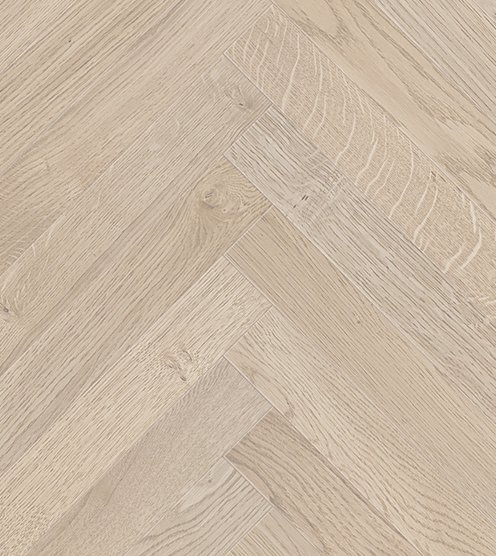
Short blocks laid at 90° to each other in a zig-zag. The traditional English parquet — at home in Victorian hallways and modern minimalist kitchens alike. We lay both true block parquet and engineered herringbone.
Parquet & herringbone →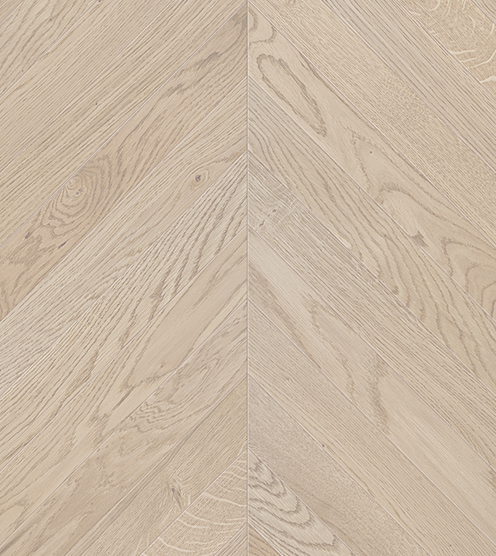
Boards mitred at the ends so the points meet in a continuous V. More directional than herringbone, more formal, considerably more setting-out — but a stunning floor when you want the eye drawn the length of a room.
Parquet & herringbone →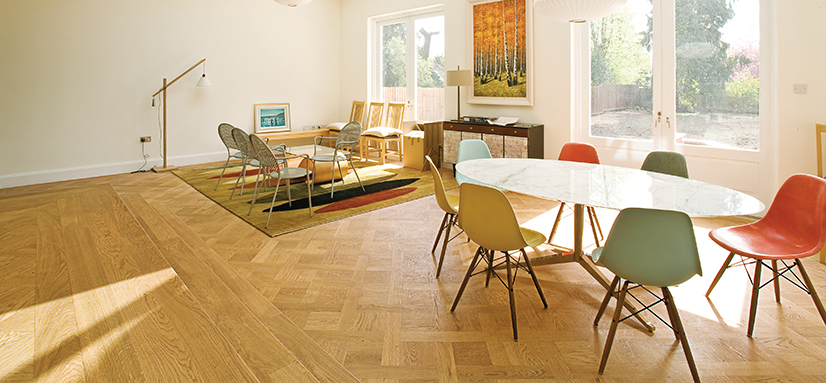
Pre-assembled square panels — Versailles, Mansion Weave and bespoke geometries. Originally laid in 17th-century French chateaux, still the floor for grand drawing rooms, hotel lobbies and listed properties.
Parquet & herringbone →
The classic finger-block "basketweave" you'll know from 1950s and 60s school halls, libraries and council buildings. We restore originals and lay new — a brilliant cost-effective parquet that still reads as proper wood.
Floor restoration →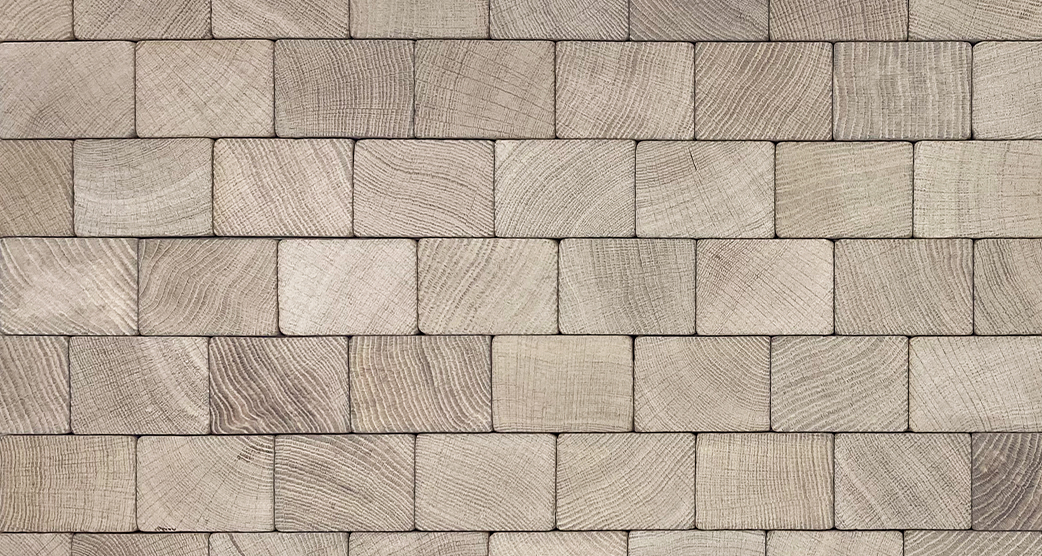
Wood cut across the grain so you're walking on tree-ring sections. Originally a factory floor — now specified in galleries, lofts, breweries and bars. Almost impossible to dent. We've laid these in two Sussex commercial fit-outs.
Commercial installations →
Thick solid oak or pine blocks with proper tongue-and-groove edges. The genuine article — bonded directly to screed or timber, sanded and finished on-site. Built to last another seventy years.
Parquet & herringbone →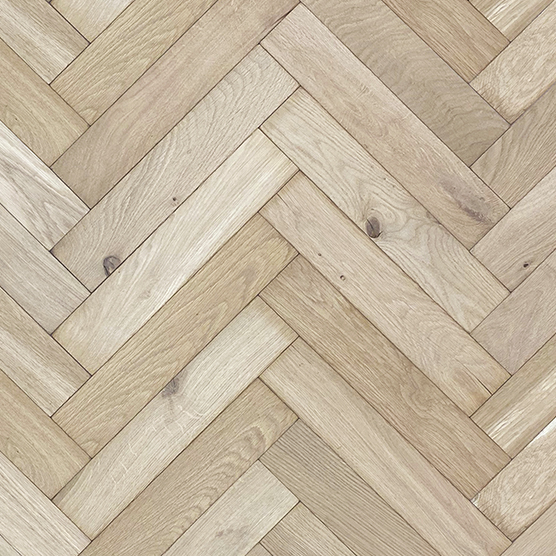
Solid blocks run through a tumbler so the edges, ends and face take on a softly worn finish. New floor, antique character — particularly nice in old farmhouses where pristine new parquet would look out of place.
Parquet & herringbone →Once we’ve settled the pattern, the next call is the look. These are the six character families we install most often. Anything below can be applied to plank, herringbone, chevron or panel — and we’ll bring physical samples to your home before you commit.
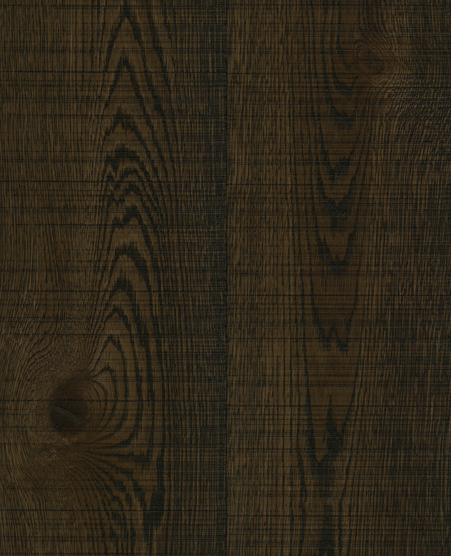
Smooth-faced, prime-grade boards with a clean, even tone. Lightly brushed and finished in a clear matt oil or lacquer. The go-to look for new-build kitchens, modern coastal homes and minimalist extensions.
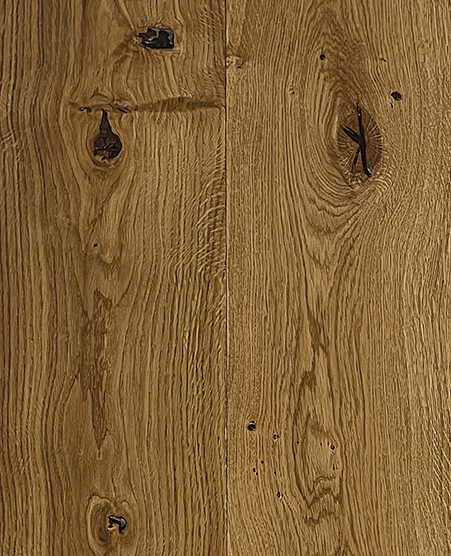
European oak chamber-fumed with ammonia — the tannins in the timber react and the wood goes a deep, even chocolate brown right through the board. Survives sanding for decades without changing colour.
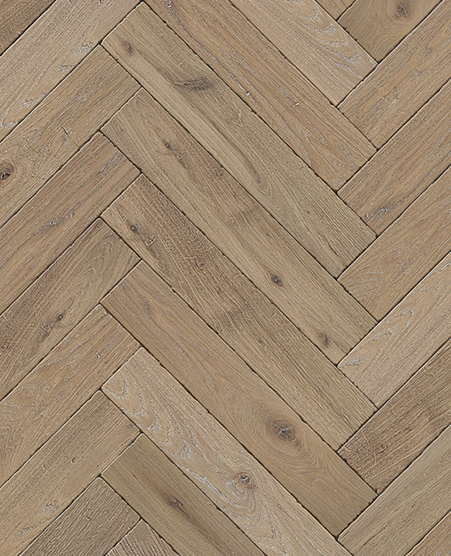
Boards hand-scraped, sawn-textured or wire-brushed before finishing so they read as a forty-year-old floor on day one. Knots, splits and shake left visible and filled with traditional black resin.
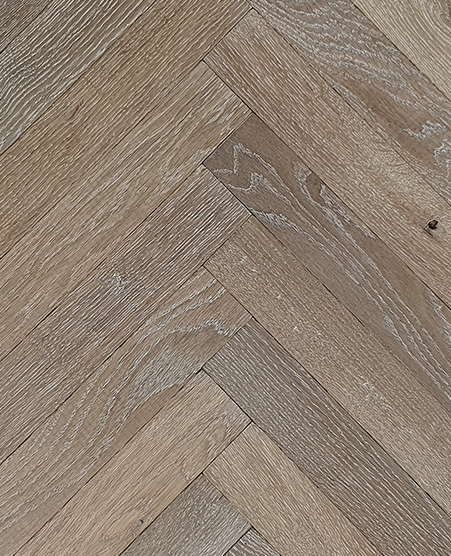
A softer, more atmospheric version of aged — lime-washed or grey-washed boards with the texture knocked back. Brilliant for period coastal cottages and Sussex farmhouse barn conversions.

Actual antique oak and pitch pine recovered from demolished schools, factories and chapels. Original saw marks, original nail holes, original patina — re-cut, re-planed and laid as proper floorboards. No two batches alike.
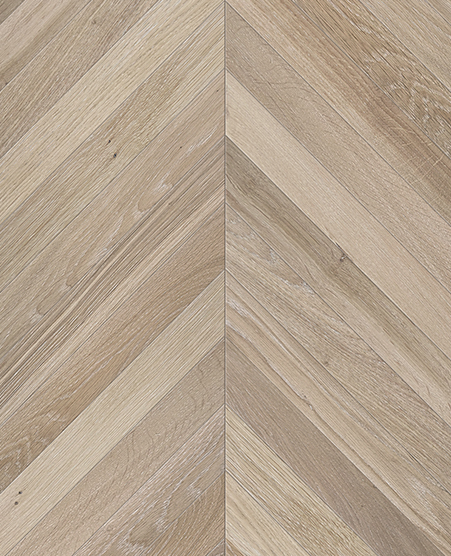
Any tone you can show us we'll match on a sample board — pale Scandi white, dark walnut, signature greys, even a deep ebonised black. Two-step reactive stains plus a clear protective top coat for genuine depth.
One question we get on every survey. Both are real wood, both will outlast you. The right answer depends on subfloor, room use, and whether there’s underfloor heating in the screed.
A single piece of timber the full thickness of the board, typically 15–22 mm. Secret-nailed onto timber joists or fully glued to screed. Sands and re-finishes virtually unlimited times.
A real oak (or walnut) wear layer of 4–6 mm bonded to a multi-ply birch plywood core. Stable enough to sit happily over screed, over UFH, and across wider floor spans.
Pick three or four you like the look of above and Darren will drop physical boards round at your survey — same species, same finish, same grade. Photos and screens can't show texture and they can't show how oak shifts in the late afternoon. Boards on the floor will.
Forrestal Flooring is the trusted flooring partner to award-winning interior design studio LEIVARS. The accolades below were won by LEIVARS for their interior schemes — we're proud to have supplied and fitted the floors behind many of them.